

Water emergencies usually include an element of surprise. This can make
household water
damage hard to predict and equally difficult to prevent. Still, paying
attention to specific warning signs—and taking preventive measures in a timely
manner—can help reduce the probability that you'll be taken off guard.
These are some of the minor warning signs that may predict a major water
emergency:
“Minor” plumbing leaks. Any and all leaks in household
water supply lines should be cause for immediate concern. A tiny weeping
pinhole in a supply line might appear inconsequential, but it could be external
evidence of advanced deterioration inside the pipe that could trigger a
catastrophic rupture at any time, flooding your house. Same goes for other
apparently innocuous signs such as moist seepage around pipe joints. Call a
plumbing professional to resolve all pipe leakage issues—minor and
otherwise—before one of them turns into a water emergency.
Aging water heaters. Nearly half of all water heaters will develop a tank leak due to internal
corrosion before they are ten years old. Early warning signs (if there are any)
are minor puddles on the floor around the unit—easy enough to mop up and put
off further action. However, small leakage often indicates that total tank
failure, including significant indoor flooding, is only a matter of time.
Consider preventive replacement of a water heater before it reaches the 10-year
average service life, whether it's leaking yet or not.
Ruptured washer hoses. Many residential washing machines
are installed with reinforced rubber hot and cold water supply hoses connected to valves on the wall behind
the unit. In as little as three years, rubber supply hoses may become brittle
and unexpectedly rupture with no advance warning. A burst washer hose will
typically release over 650 gallons of water into your house every hour until
water is turned off. If no one is home at the time, water damage can be
extensive. To avoid the unexpected, don't wait until rubber washer hoses exceed
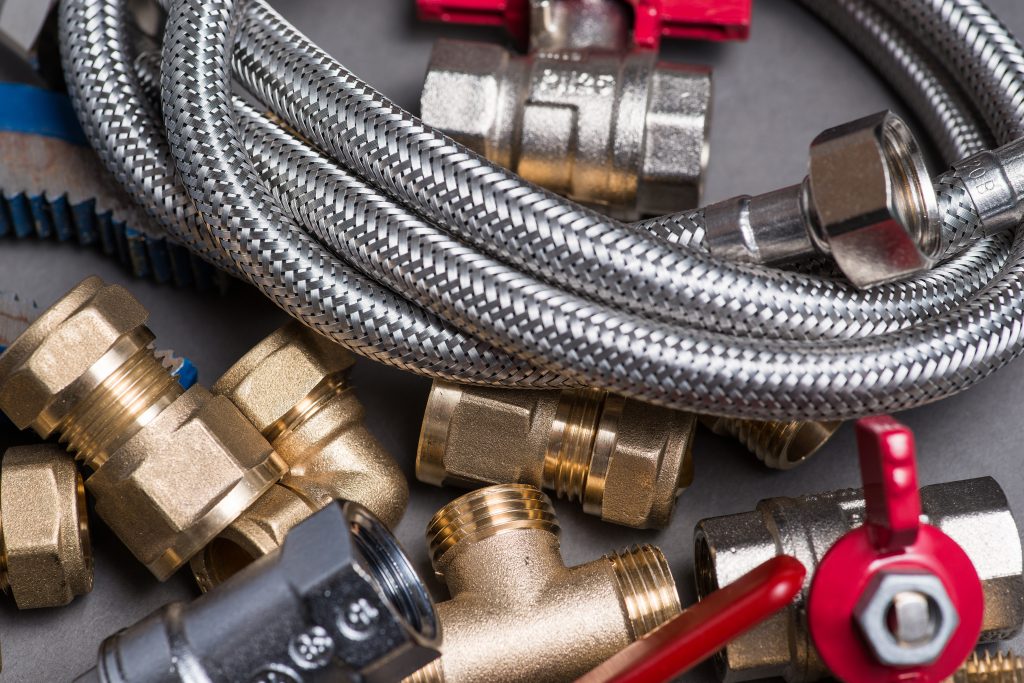
their safe service life. Replace with braided stainless steel lines that will
reliably extend the service life.


