

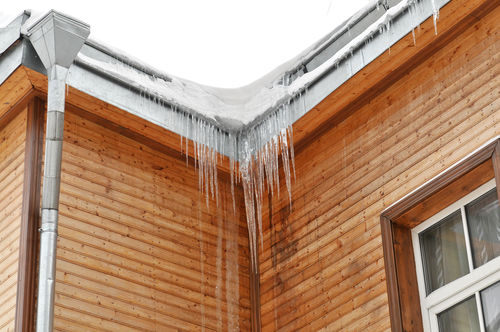
Although Spring is right around the corner, winter water damage poses particular concerns to homeowners in climates who are receiving their last batches of icy weather of the season. Serious weather common during the winter season is more likely to cause inundation of water from the outdoors. Snow melt on the roof may leak into attics and freezing temperatures may rupture plumbing. Much of this infiltration may occur gradually and in parts of the structure that aren't normally observed. Damage may not be noted until it's already severe. Prevention is always the best strategy. Here are some tips to ward off winter water damage.
- Keep gutters clear. Rain gutters obstructed by leaves or other debris may cascade rainwater and/or snow melt down exterior siding or over brick masonry. These materials aren't engineered to resist a constant flow of water and will allow water to penetrate the structure.
- Check the downspout discharge. Downspouts should connect to a drain system or at least extend far enough from the house to convey water away from the foundation and entry points underground. If the downspout fills a rain barrel instead, make sure it doesn't freeze in winter.
- Evaluate drainage patterns. The yard around the home's perimeter should be graded to divert heavy rain water away from the house. Grading conformations change with erosion and foot traffic. Make sure there are still clear patterns that convey water out into the yard, not into the house.
- Keep exposed pipes warm. Insulate water supply lines in the basement or crawl space. During a hard freeze, open under-sink cabinets and closets to circulate warm air into wall spaces and keep pipes from freezing. Open taps and allow a trickle of water to relieve pressure in pipes from ice formation.
For more information on preventing winter water damage, contact Rytech professionals. We have franchises in 17 states.
Image via Shutterstock.com


