

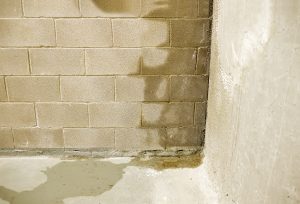
According to the American Society of Home Inspectors, basement water seepage is a problem in over 60% of homes that have a basement. A frequently wet basement becomes an increasingly unusable space in the house. Seepage threatens items stored there, attracts pests and vermin, and supports toxic mold growth. Most basement water seepage issues can be reduced to two principal causes: heavy rainfall seeping down and ground water rising up.
Rainfall Issues
Rain deeply saturating soil surrounding the house perimeter induces hydrostatic pressure against basement walls, promoting seepage through tiny cracks in the walls. Reduce rainfall-related seepage into the basement with these steps.
- Keep gutters clear. Clogged gutters can overflow over 1,000 gallons of water during a 1-inch rainstorm. This torrent soaks deep into soil directly below, producing hydrostatic pressure and triggering seepage.
- Extend downspouts. Gutter downspouts may be too short, releasing water where it saturates the ground adjacent to basement walls and causes seepage. Downspouts should be extended to discharge water at least three feet from the house—even more is better.
- Grade to divert water. Make sure landscaping surrounding the house slopes slightly to move water away from the structure. Add extra topsoil to create a downward slope of approximately 4 inches in the first six feet away from the house.
Groundwater Pressure
Where a high water table occurs naturally, groundwater may rise to a level higher than the basement floor. Seepage then occurs through cracks in the floor as well as at the joint between the basement wall and the floor.
- Add a sump pump. Installed in a basin excavated in the basement floor, a sump system collects rising ground water to relieve pressure under the floor. The pump actuates automatically to pump water out of the basin through a discharge pipe and typically releases it somewhere in the backyard, far from the house.
- Install a footing drain. Buried around the perimeter of the basement foundation, a footing drain incorporates a perforated pipe surrounded by gravel backfill to collect and carry away rising ground water. This reduces seepage at the joint between the basement wall and floor.


