
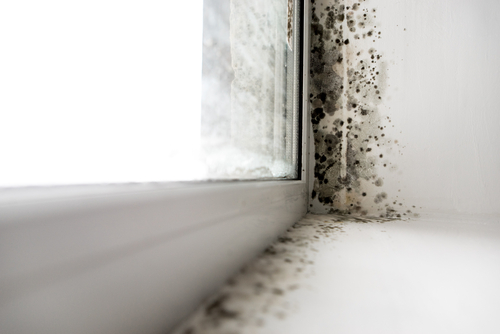
Mold hazards after water damage aren't a question of “if.” They are more frequently simply a matter of “when.” Even that time variable leaves little leeway: most forms of mold shift from dormant phase into growth mode within 24 to 48 hours following exposure to moisture. After an incident of indoor water damage from any cause, the clock is ticking. Inert spores activate, growth begins, and mold hazards after water damage become inevitable.
What Happens And Why?
Live mold rapidly spreads from its point of origin throughout the house by releasing millions of reproductive spores—microscopic airborne carriers of mycotoxins that can cause a variety of symptoms from allergies to chronic illness. As the concentration of spores in indoor air increases, so does the hazard to occupants inhaling and ingesting these toxins. Active mold growth is also destructive to the structure and belongings inside a home. Any objects that provide cellulose including wood, fabrics and paper are a breeding ground for toxic mold that rapidly destroys surfaces where it grows, penetrating deep into the material.
What Now?
Because mold hazards after water damage are statistically probable, any water damage recovery process must also include professional mold remediation procedures. Qualified experienced technicians trained in this specialized field are critical to the next steps.
- As water is extracted and drying techniques eliminate residual moisture, air samples are taken to detect the presence of active mold spores. The type of mold and extent of contamination can be estimated.
- Visual inspection of areas where mold typically hides—often out of sight of normal daily life—will reveal active growth. These areas will be isolated to immediately stop further spread.
- Analysis of direct samples conclusively determine mold type and toxicity.
- EPA-approved fungicides formulated to neutralize the specific type of mold are applied and all evidence of growth physically removed. Where mold growth has penetrated surfaces of wood, drywall or other building materials, these segments may be removed and replaced with new material.
- Follow-up air sampling is used to confirm effectiveness of the procedure.
For a professional approach to eliminating mold hazards after water damage, contact Rytech, Inc.


