

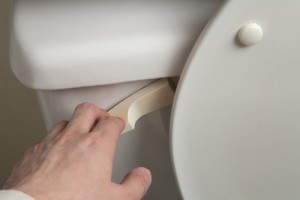
Toilet overflow water damage can be considerable. The steps you take immediately can successfully limit the amount of damage—or make it worse. It's important to know what to do and when to do it. Watching a toilet overflow is a panicky, helpless feeling we've all experienced. However, you're not helpless to minimize toilet overflow water damage if you follow these simple tips.
- First and foremost: Don't flush again! It's a natural reflex when you see a clogged toilet approaching the brink of overflow. However, flushing again only admits more water to the toilet, making the overflow and subsequent damage that much worse.
- Second, turn off the water supply. The toilet shutoff valve is behind the toilet on the wall near the floor. That should end the immediate crisis. However, given the few seconds it takes to get the valve shut off, you'll probably have some overflow clean-up to do.
- Caveat: Toilet shutoff valves may accumulate mineral deposits over time and become difficult or impossible to turn. Now what? Take the tank lid off and lift the float ball or fill-valve float up as far as it will go. This should close the fill valve and stop water flowing into the tank, minimizing overflow. You'll have to keep holding the float up until someone else can turn off the main water shutoff valve to the house.
- As preventative measures, operate the water shutoff to every toilet once a year to verify free and easy valve movement. Also, if you're leaving town for a few days, turn off the individual shut-off valves to fixtures like toilets, sinks, and washing machines to prevent severe water damage from occurring when no one's around to shut it off.
Ask the experts at Rytech, Inc. for more tips to reduce toilet overflow water damage.
Image via Shutterstock


