

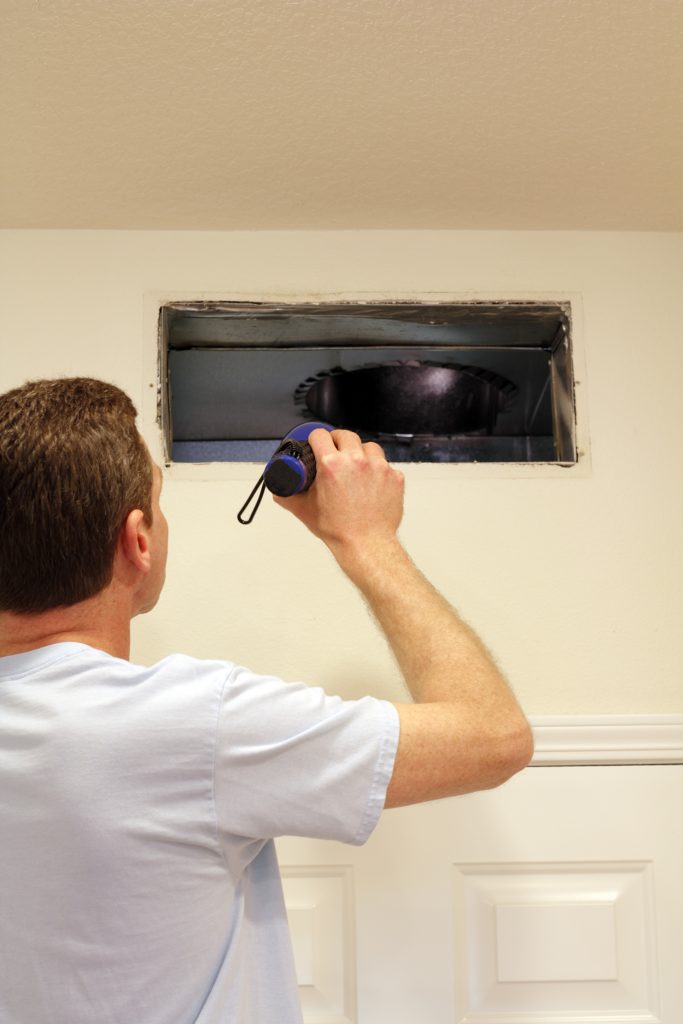
Under certain conditions, your HVAC ductwork may be the perfect habitat for mold. Active
mold growth thriving inside ducts can serve as a focal point of contamination
as the system airflow disperses toxic spores throughout the house. This may
trigger allergic symptoms as well as chronic illness in persons with a
sensitivity to these pathogens.
How does this happen?
Ductwork is dark and dusty. Mold avoids sunlight and household dust usually
contains the sort of microscopic food that mold feeds on. In this
fungus-friendly environment, the only missing ingredient is moisture. Ductwork
conveying cooled or heated air ought to be dry. In some cases, however,
moisture can form:
- If the air conditioner evaporator coil that extracts water vapor from the airflow isn't performing up to specs, condensation may form on surfaces inside ductwork.
- If ductwork is leaky, it may pull in humid outdoor air from the attic, crawl space or other unconditioned zone. Ducts become dank and mold growth may be activated.
How Will I Know?
If you suspect ductwork mold contamination—unexplained musty odors when the
HVAC system is running are just one giveaway—an inspection should be performed.
Most segments of the system are inaccessible to the average homeowner. A mold-remediation
professional with specialized equipment is required to check all spans of
ductwork.
Not everything that looks like mold is mold. If suspicious growth is
discovered, it must be lab-tested to confirm active mold growth and to
determine the type of mold.
What's The Next Step?
- A thorough duct cleaning procedure is required to remove active mold. This includes physical removal of growing mold as well as vacuuming the entire span to remove accumulated spore residue.
- Affected duct surfaces must be sterilized with EPA-approved fungicides, as well as the system components like the evaporator coil and the condensate drain pan in the indoor air handler. A new air filter is also installed.
- Conditions that promote mold contamination inside ducts must be addressed. Evaporator coil issues that allow excess humidity into the airflow, as well as leaks that pulled humid, unconditioned air into ductwork should be resolved to prevent a recurrence.


