
Mold removal shouldn't be confused with professional mold remediation services. Strictly speaking, it's technically impossible to “remove” all mold. Dormant microscopic mold spores are inherent in nature and pervasive in both outdoor and indoor environments. Unless (or until) they are triggered into active growing mode, dormant spores pose no issues. However, where active mold is verified to be growing inside a home, simple one-step removal is rarely sufficient to address the comprehensive problem. That's why contacting a certified mold remediation company are critical.
Mold Removal vs. Remediation
The certified expert at Rytech Restoration describe mold removal as the process of removing any visible mold from the surfaces of your home or business. This includes scrubbing, wiping, and vacuuming the affected areas. Mold remediation, on the other hand, is a more comprehensive approach to dealing with a mold problem and involves identifying and correcting the underlying source of the moisture that caused the mold to grow in the first place. This could include repairing plumbing leaks, fixing water damage, and improving ventilation and moisture problem that exist at your residence or business.
Where To Begin When Solving Mold Problems
Mold and mildew remediation begins with air samples to determine the type of reproductive spores, as well as their concentration. Unlike inert dormant spores, reproductive spores released by active growing mold are known triggers for allergy symptoms and suspected in a variety of illnesses. Identifying the type of mold by spore samples helps mold removal companies like Rytech determine the best approach. The spore count also provides a basis to estimate the extent of contamination inside the home.
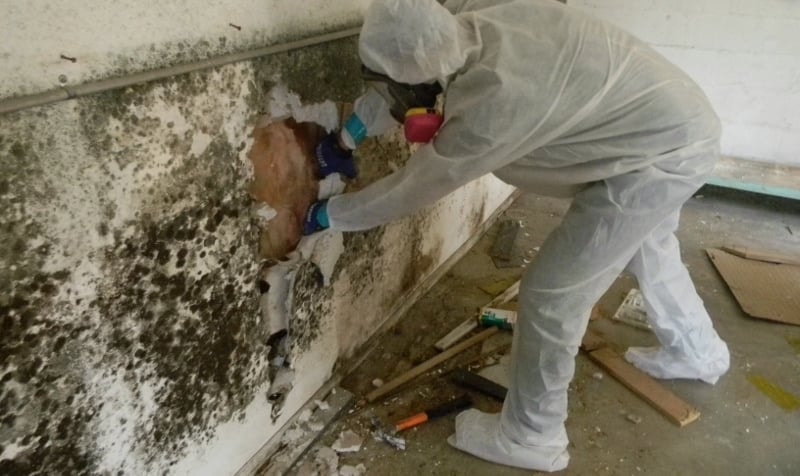
Once colonies of growing mold are pinpointed, those areas are sealed to achieve containment and prevent further mold spread. Rytech's mold expert would tell you that clean-up of mold depends upon its location. Where it grows on hard, non-porous surfaces, wiping followed by treatment of the surface with an approved biocide to prevent recurrence may suffice. When mold growth affects porous materials, such as wood, wallboard and other building materials, the growth may infiltrate beneath the surface and require removal and replacement of the affected material.
To remove active reproductive spores from the whole-house environment, high-efficiency filters are installed in the HVAC system. HEPA-filtered vacuums are also utilized to remove spores that have settled out of the air.
No mold or mildew remediation project is complete without identifying and addressing issues that may have contributed to active mold growth. These include ongoing sources of moisture such as plumbing leaks, rain seepage from outdoors, ground water intrusion or even simply chronic high indoor humidity.
Contact the mold remediation experts at Rytech Restoration for more information about professional mold and mildew remediation.


