

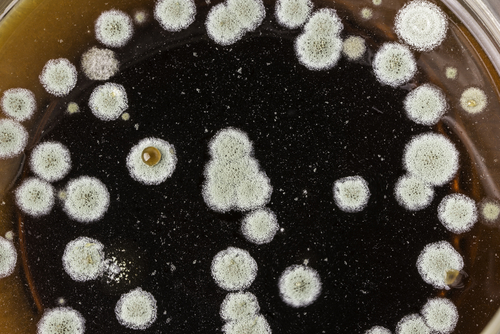
What's the difference between mold and mildew? They're both fungi, after all, and both tend to occur under similar circumstances inside the house. However, the tendency to spread and contaminate wide areas, the potential for physical symptoms due to exposure and the techniques required to eliminate these two fungi make the difference between mold and mildew very meaningful.
Appearance
Mildew typically grows flat on wet surfaces and does not protrude outwards. Mildew begins as white or gray spots and, as the growth ages, turns yellowish or black.
Mold is usually a slimy or fuzzy growth that extends outward. It is usually invasive on building materials like wood or drywall and grows into the surface. Mold growth can assume many colors—green, yellow, gray, blue, brown, black, or white—and may change hues as time passes.
Health Effects
While some persons may experience mild allergic responses in a home where a large amount of mildew is present, most mildew is relatively benign.
Active mold growth releases millions of reproductive spores which may reach toxic levels of concentration. These airborne spores contain mycotoxins that induce an immune response in susceptible persons. Symptoms of sustained exposure cover a wide range from common allergic reactions to respiratory trouble, heart problems, depression and extreme fatigue.
Treatment
Most mildew can be simply wiped off smooth surfaces with a wet sponge or rag. A dilute mixture of household bleach and water or a consumer-grade mildew treatment can be applied to prevent recurrence.
Successful mold remediation requires a multi-faceted approach. Type and extent of contamination is determined with air sampling. Growing mold must be located and physically removed. Surfaces where mold is found are then treated with EPA-certified biocides. Where mold has penetrated into building materials, the material may need to be replaced. Follow-up air sampling is required to verify that all active mold has been removed. Also, conditions that trigger mold growth—such as moisture from sources like plumbing leaks, roof leaks or simply high indoor humidity—should be resolved to prevent recurrence.
Need more info about the difference between mold and mildew? Contact the professionals at Rytech, Inc.


