

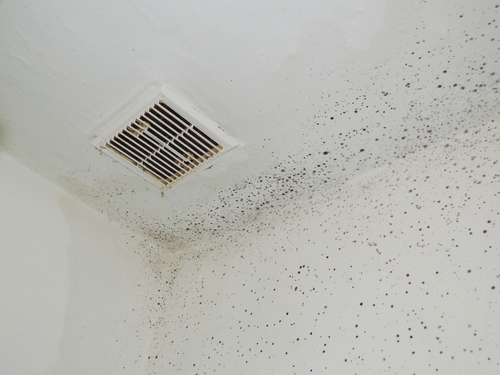
Because mold needs so little to thrive, the causes of mold in the home can be numerous. Anywhere airborne spores migrate and contact microscopic organic matter plus moisture may be a mold-friendly environment. Still, some causes of mold in the home are more immediately apparent than others. If you suspect potential mold growth for any reason — such as you have recently experienced water damage — the only definitive answer is to have air sampling performed by a Certified Industrial Hygienist.
In addition to obvious places like wet carpeting or a chronically damp basement, here are some other less common causes of mold:
- HVAC contamination. Your heating and cooling system recirculates a high volume of air throughout the entire house. Active mold spores may contaminate that airflow in two ways. The A/C evaporator coil, typically sealed inside the indoor air handler, is often damp due to condensation. As dormant spores in the airflow contact the wet coil, active mold growth may gain a foothold. Coil mold can actually obstruct airflow through the system, not to mention dispersing toxic contamination through the entire house. Mold may also grow covertly inside ductwork that is frequently wet due to small roof leaks in the attic or even just chronic high humidity.
- Inadequate fresh air. To conserve energy, today's homes are much more tightly sealed than houses of the past. While this lowers heating/cooling costs, in confined airtight environments, airborne mold spores may concentrate to levels far higher than what you would experience in fresh air in the great outdoors. Indoor water vapor also rises in under-ventilated houses. High concentration of spores plus extra moisture is a perfect formula for mold growth.
- “Built-in” mold. Newly constructed homes aren't immune to mold. It can happen when building materials arrive on-site already contaminated due to becoming wet in the rain or other sources of moisture. As these components are utilized in construction of the home, active mold can be literally built-in to unseen interior spaces such as the inside of wall voids.
For more about common and uncommon causes of mold in the home, contact Rytech, Inc.


