

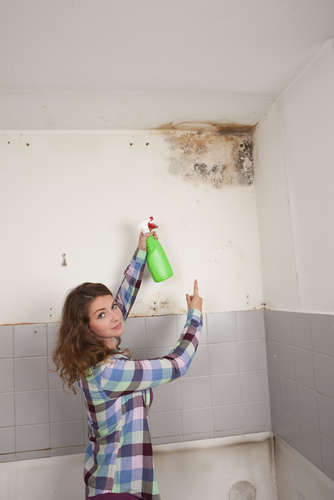
Mold in the home is the source of many myths; that's no surprise. An air of mystery surrounds mold contamination and its ill effects. Dormant mold spores are invisible and yet all around us, both indoors and out. Active growing mold often occurs covertly, hidden from sight in inaccessible areas of the house. Effective mold decontamination strategies must be based on science and experience—not mythology. Here are some of the myths you may hear as you confront mold issues in your home.
- MYTH: Household bleach is an effective mold treatment. Bleach may whiten the appearance of mold, but it doesn't neutralize mold growth on the affected surface. Mold growing on non-porous surfaces may be wiped away, but when it invades porous surfaces, wiping with or without bleach won't effectively decontaminate the area.
- MYTH: Sharp eyes can detect mold. Mold spores can't be seen by the naked eye, and mold growth most often occurs out of sight. Instead of your eyes, your nose is a better mold detector. That musty, moldy smell associated with zones like a crawl space or damp basement is a dead giveaway.
- MYTH: Indoors or out, mold is hazardous. Actually, fungi growing in the great outdoors is an important part of nature's cycle. Only when mold is growing indoors is it generally a health issue, due to the extremely high concentration of airborne spores that can't disperse in the enclosed interior of a home.
- MYTH: All mold is toxic. The fact is, most forms of mold are benign. However, the variety most troublesome to susceptible individual, known as Stachybotrys, is unfortunately one of the most common forms. Also known as black mold, the reproductive spores released by this type are associated with a number of illnesses in humans.
To bust more myths about mold in the home, or to ensure mold contamination is tackled the right way, contact the specialists at Rytech, Inc.
Image via Shutterstock.com


