
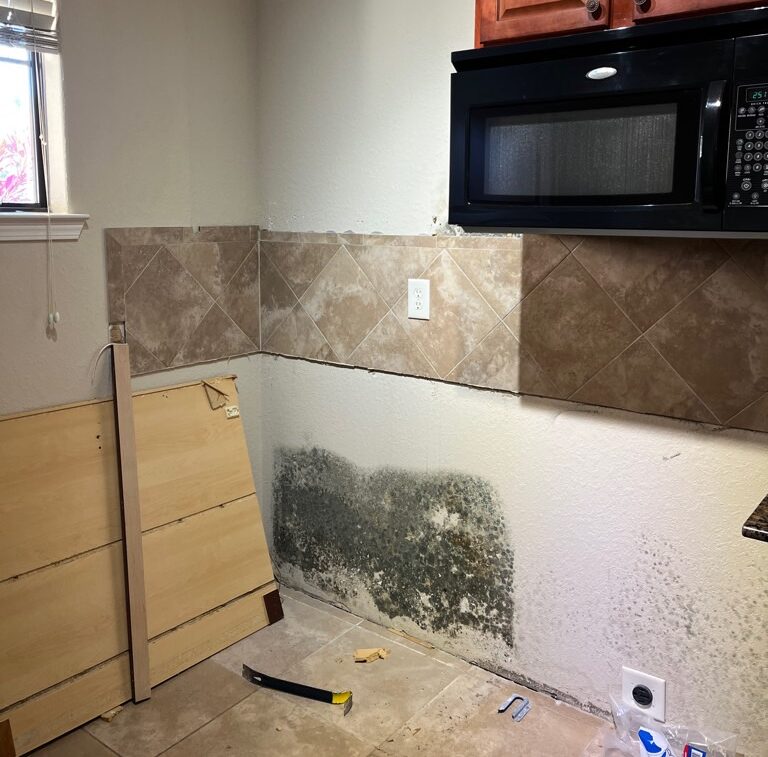
Besides making your home smell, mold and mildew can do a lot of damage before you realize it. If you spot signs of mold, diagnosing and dealing with the problem early will protect your home and your health. Understanding the difference between mold and mildew is a good place to start.
Know What Mold You're Dealing with
Around 12 genera of fungi commonly grow in homes. Both mold and mildew are fungi, but mildew is a type of mold. The most obvious difference between mold and mildew is appearance. Mold is thick and fuzzy and grows in a variety of colors on many different materials. Mildew grows in a thin, powdery layer and is typically grey, white, or light yellow. True mildew is usually found on plants, so what's growing in your house is most likely mold.
Dark Brown Mold
The health effects of household mold vary. Alternaria, the dark brown mold often found in showers, and Aspergillus, the orange, brown and white molds that grow in walls, can both trigger allergies, but are largely harmless in small amounts.
Dark Green And Black Mold
On the other hand, Stachybotrys, the dark green or black mold known simply as "black mold" is so toxic it can cause severe health problems in otherwise healthy people. This mold typically grows on cellulose materials, such as wood, fiberboard, and wallpaper.
Assess Your Mold Contamination
Before you start cleaning any mold you find, inspect your home to determine how far it's spread. Pay special attention to the corners of ceilings, surfaces behind and under furniture or under rugs, and the undersides of shelves. The location of the mold can also help you determine the type you're dealing with. For small areas of most types of mold growth, wearing gloves, a hair cover, and an N-95 respirator mask is enough to protect you while you clean. If the mold covers more than around 10 sq. ft. or you suspect your home has black mold, contact a mold remediation specialist.
State Licensed Mold Inspectors Know Best
In conclusion, mold and mildew can be a serious problem in homes and businesses. It is important to understand the difference between mold and mildew and to assess the damage before starting mold cleaning. If the area of the mold is larger than 10 sq. ft. or if it is suspected to be black mold, it is important to call a state licensed mold insepector for the job.
Resolve Your Issues With Professional Mold Remediation Services
If you suspect you have a mold and mildew issue at your home, contact your local Rytech Restoration to schedule a mold inspection today. Rytech's mold inspectors have the experience to help you identify the type of mold you're dealing with and the best method to efficiently remove it so your indoor environment can return back to a safe and healthy space.

Rytech Restoration's Emergency Service Locations
Find your local Rytech Restoration below by clicking and expanding the state where your property is located. Live specialists are standing by, ready to answer your questions and dispatch a certified technician to your door.
ALABAMA

Rytech Restoration of Greater Mobile
ARIZONA
Rytech Restoration of Phoenix
CALIFORNIA
Rytech Restoration of Orange County
Rytech Restoration of Sacramento
Rytech Restoration of South San Bernardino
Rytech Restoration of Southwest LA
Rytech Restoration of Ventura County
Rytech Restoration of West Los Angeles County
Rytech Restoration of Western Riverside
Rytech Restoration of San Diego
Rytech Restoration of Ontario
Rytech Restoration Franchise Opportunities Available
COLORADO
Rytech Restoration of Greater Denver
DELAWARE

Rytech Restoration of Northern Delaware
FLORIDA
Rytech Restoration of Central FL
Rytech Restoration of Jacksonville
Rytech Restoration of Brevard, Flagler, and Volusia
Rytech Restoration of Gainesville
Rytech Restoration of Pensacola
Rytech Restoration of Lee & Collier County
Rytech Restoration of Orlando
Rytech Restoration of Tallahassee
Rytech Restoration of Treasure Coast
Rytech Restoration of Sarasota
Rytech Restoration of Broward - Ft. Lauderdale
Rytech Restoration of Palm Beach
Rytech Restoration of Miami-Dade FL
Rytech Restoration of Monroe
Rytech Restoration of Sarasota
Rytech Restoration of North Pinellas
Rytech Restoration of St. Petersburg
Rytech Restoration of Southern Hillsborough
GEORGIA
Rytech Restoration of Gwinnett County
Rytech Restoration of Metro Atlanta
Rytech Restoration of North East Georgia
Rytech Restoration of Marietta
ILLINOIS
Rytech Restoration of DuPage County
Rytech Restoration of Northwest Chicago
LOUSIANA
Rytech Restoration of Baton Rouge
Rytech Restoration of New Orleans
Rytech Restoration of Lake Charles-Layfayette
MARYLAND
Rytech Restoration of North Metro
Rytech Restoration of Baltimore
Rytech Restoration of Washington DC
Rytech Restoration of Southwestern Maryland
Rytech Restoration of Silver Springs
Rytech Restoration of East Montgomery County
MISSISSIPPI
Rytech Restoration of Mississippi Gulf Coast
MISSOURI
Rytech Restoration of N. St. Louis
Rytech Restoration of St. Charles County MO
NEW JERSEY
Rytech Restoration of Bergen County NJ
NEW MEXICO

Rytech Restoration of Central New Mexico
NEW YORK
Rytech Restoration of Long Island
Rytech Restoration of Mid Hudson
NORTH CAROLINA
Rytech Restoration of Charlotte NC
Rytech Restoration of Raleigh
PENNSYLVANIA
Rytech Restoration of Delaware County
SOUTH CAROLINA
Rytech Restoration of the Midlands
Rytech Restoration of Charleston
Rytech Restoration of Pee Dee - Florence
Rytech Restoration of Pee Dee - Myrtle Beach
Rytech Restoration of the Upstate
TENNESSEE
Rytech Restoration of Nashville
Rytech Restoration of East Tennessee
Rytech Restoration of Chattanooga
Rytech Restoration of Memphis
TEXAS
Rytech Restoration of Austin
Rytech Restoration of The Woodlands
Rytech Restoration of Bell County TX
Rytech Restoration of College Station / Georgetown TX
Rytech Restoration of Dallas
Rytech Restoration of Houston
Rytech Restoration of North Houston
Rytech Restoration of San Antonio
Rytech Restoration of Southwest Houston
Rytech Restoration of Galveston
Rytech Restoration of Texas Gulf Coast
Rytech Restoration of Clear Lake
Rytech Restoration of West Texas
VIRGINIA
Rytech Restoration of Southwestern Maryland
Rytech Restoration of Northern Virginia
WASHINGTON
Rytech Restoration of Seattle
WISCONSIN


