

Air sampling for mold is a far more scientific procedure than sniffing the air and jumping to conclusions. Yes, some forms of mold may exude a telltale “musty” odor — but so does common mildew and other forms of bacterial growth. Visual identification is also iffy: many growths resemble mold. For these reasons, you should have air sampling for mold performed by a certified air quality technician who relies on scientifically verifiable results, not hunches or guesswork.
An air quality technician with Advanced Microbial Remediation certification by the IICRC (Institute Of Inspection Cleaning and Restoration Certification) follows standardized industry procedures and utilizes specialized technology to detect and identify mold contamination inside a house or other structure. Air sampling for mold not only verifies the presence of active mold; analysis of spores can confirm the type — not all mold is necessarily toxic — as well as estimate the concentration inside the house. This helps evaluate the extent of contamination. By testing air throughout the house and comparing results, the location of primary mold contamination may also be narrowed down, expediting the remediation process. Based on the results of air sampling, if active mold growth is indicated, it will be located, physically sampled, and tested to confirm the type.
A certified technician typically uses one or more of these standard air sampling methods:
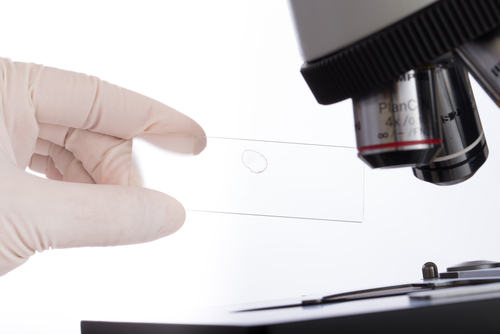
- In impaction sampling, an air pump draws a sample of household air and then subjects it to pressure in contact with a microscopic slide. Airborne spores present in the air will stick to the slide and can be identified under a microscope.
- Disposable cassettes are connected to an air pump to retain spores gathered from the air over a specified duration. The amount and type of spores captured over a specific time span helps determine the severity of contamination within the house.
- Particle collectors accumulate airborne mold spores that settle out of the air into a culture dish. Moisture and nutrients are added to allow the spores to grow into active mold for accurate typing.
For professional air sampling for mold by an IICRC certified technician, contact Rytech, Inc.


