

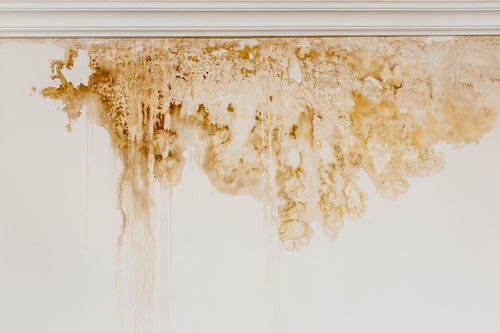
Signs of a drainage problem on your property may be the prelude to water damage to your home. Water is always in motion. If it's not effectively kept away from your house, it may be moving into your house. Minimize the surprise element in water damage by looking for these signs of a drainage problem.
Overflowing Gutters
Exterior wall and siding materials are made to withstand rain showers—not a continuous cascade of water flowing down the surface from a debris-clogged, overflowing gutter above. Water permeating exterior walls leaks into interior wall spaces, causing substantial hidden water damage.
Deficient Downspouts
Water flowing through gutter downspouts should be discharged far enough away from the home that soil saturation doesn't affect the foundation or basement. Make sure the downspout discharge point is at least five feet from the house. Add downspout extensions to increase the total length, if necessary.
Basement Blotches
Intermittent water stains on basement walls usually occur near the top of the wall where runoff infiltration is most severe. It's usually the result of some ongoing condition—such as landscape grading that diverts runoff toward the house instead of away. Lower on the wall, a continuous line of water stain around the basement indicates a high natural ground water table under the house. Installation of a sump pump is recommended.
Wall Cracks
Vertical cracks up to 1/8 in a concrete basement wall are normal due to settling. Active cracks that continue to widen may signify hydrostatic pressure from heavy, water saturated soil. Horizontal cracks are a specific red flag and may precede total failure of the wall. A high water table or accumulated runoff from poor grading are the usual suspects.
Seeing signs of a drainage problem or the water damage that accompanies it? Contact the professionals at Rytech.
Image via Shutterstock.com


