

Books and Documents After Water Damage
While substitutes for many household possessions can be acquired at a price, salvaging documents after water damage often takes high priority because these items are often invaluable and irreplaceable.
Vital financial records, family history items, photographs, books, and other printed materials are particularly vulnerable to water damage and can be difficult or impossible to replace.
Whether a burst pipe floods your home office, a washing machine overflows, or a storm sends water into your basement, acting quickly can make a significant difference. Many books, photographs, and important documents can often be successfully restored when proper drying methods begin soon after the loss.
At Rytech Restoration, we understand that recovering from water damage isn't just about drying your home. It's also about helping protect the items that tell your family's story, support your business, or are essential to your daily life. Our IICRC-certified technicians have helped property owners recover important contents through professional water damage mitigation and contents cleaning services for more than 30 years.
What Should You Do Immediately After Discovering Water-Damaged Documents?
The first few hours after water damage are critical. earn more about What to Do Immediately After Water Damage for additional emergency steps you can take before professional help arrives. Before attempting to dry books or important papers, follow these steps:
- Remove books and documents from standing water as soon as it is safe to do so.
- Handle wet paper carefully because saturated pages tear easily.
- Do not use hair dryers, ovens, microwaves, or direct sunlight to speed drying. Excessive heat can permanently damage paper and photographs.
- Keep wet pages together instead of pulling them apart.
- If you cannot begin drying immediately, freezing valuable paper materials may help stabilize them until professional restoration can begin.
- If the water originated from sewage, flooding, or other contaminated sources, avoid handling documents without proper protective equipment and contact a professional restoration company.
The faster water damage is addressed, the greater the likelihood that books, photographs, and important records can be successfully restored before mold growth or permanent deterioration occurs.
Delaying cleanup can significantly increase the likelihood of microbial growth. Learn more about How Long Does Mold Take to Grow After Water Damage?
Rytech Restoration Professional Contents Cleaning Services
Professional restoration companies use several methods depending on the type of materials, their value, and how severely they have been affected.
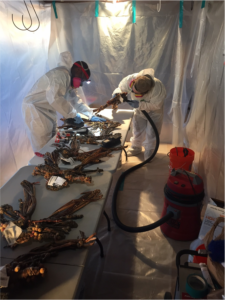
Air Drying
This is the most common, low-tech method for drying a small volume of books and papers that become damp but are not completely saturated.
Fans may be used to gently circulate air over damp materials while commercial dehumidifiers help control indoor humidity. Textiles should be individually laid out for drying. Pages of books may be interleaved with wax paper to reduce sticking, and photographs should be separated carefully and dried face-up whenever possible.
Air drying works best for small quantities of slightly damp materials. Valuable archival documents, rare books, or heavily saturated items often require more specialized restoration techniques.
Dehumidification
This method uses commercial-grade dehumidifiers to reduce indoor humidity while creating conditions that support controlled drying. Indoor temperature and humidity are carefully managed based on the materials being dried and the extent of water damage.
Professional structural drying equipment also helps reduce the risk of secondary damage, including mold growth and continued moisture absorption into paper products.
Freeze Drying
Wet paper materials may be quickly transferred to a blast freezer and exposed to continuous temperatures as low as -10 degrees Fahrenheit. Fast action is necessary to commence the drying process before mold growth permanently damages paper. The freeze drying process may take several weeks or even months to achieve.
Freezing temporarily stabilizes books and documents by slowing deterioration, preventing pages from sticking together, and reducing the opportunity for mold growth while awaiting specialized restoration.
The freeze-drying process itself may take several weeks or even months depending on the volume and condition of the materials.
Vacuum Thermal Drying
Vacuum thermal drying uses controlled heat inside a vacuum chamber to remove moisture from heavily saturated books and documents.
While this method can successfully dry extremely wet materials, bound books often swell or distort during the process, making rebinding necessary after restoration.
Special Considerations for Family Photographs
Family photographs often carry sentimental value that cannot be replaced. If photographs become wet:
- Handle them only by the edges whenever possible.
- Do not separate photographs that have become stuck together.
- Rinse away mud or debris gently with clean water if necessary.
- Lay photographs face-up to dry on a clean surface.
- If immediate drying isn't possible, freezing photographs may help preserve them until professional restoration can begin.
When Should You Call a Professional Contents Restoration Company?
While some lightly damp documents can be air dried at home, professional assistance is recommended when:
- Large quantities of books or documents have been affected
- Items have been submerged for an extended period
- Water came from Category 2 or Category 3 water sources
- Family photographs, legal records, passports, deeds, or historical documents are involved
- Mold growth has already begun
- Commercial records or business documents have been affected
Professional contents restoration companies have specialized drying equipment, climate-controlled storage options, inventory systems, and restoration techniques designed to maximize the number of items that can be successfully recovered.
Common Mistakes to Avoid
Many well-intentioned efforts can actually make water-damaged documents worse. Avoid these common mistakes:
- Using hair dryers or ovens
- Leaving wet books stacked together
- Trying to separate pages that are stuck together
- Exposing documents to direct sunlight
- Throwing away valuable items before they have been professionally evaluated
- Waiting several days before beginning the drying process
In conclusion, water damage can be devastating, especially when it affects irreplaceable books, photographs, and important documents. Fortunately, several professional restoration methods, ranging from controlled air drying to specialized freeze drying, can often help recover materials that might otherwise be considered a total loss.
Every water damage situation is unique, and successful restoration depends on factors such as how long materials remained wet, the type of water involved, and how quickly mitigation begins.
Licensed water damage restoration companies like Rytech Restoration have the knowledge, specialized equipment, and experience to help maximize the recovery of important documents, books, photographs, and other valuable contents while mitigating further damage throughout your property.
In addition to emergency water extraction and structural drying, Rytech offers professional contents cleaning, pack-out services, climate-controlled storage, and detailed documentation to help property owners recover faster while navigating the insurance claims process with confidence.
If you have experienced water damage and need professional water damage restoration or contents cleaning services, contact Rytech Restoration today for immediate assistance and let our experienced team help you protect what matters most.


