

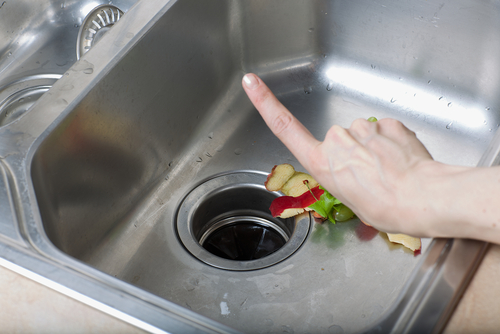
Kitchen leaks don't take a holiday and a clogged or defective disposal is sometimes at fault. While today's units provide reliable service life of about eight years, defects that develop in plumbing connected to the disposal or its sink mounting can trigger hidden water damage. Similarly, a disposal that can't grind improperly discarded waste may cause drain pipe backups and also hinder proper dishwasher drain function. Because the holiday season typically means increased cooking activity and disposal use, it's also an appropriate time to prevent kitchen leaks and other dysfunctions by taking these three steps:
- Limit use of the disposal to biodegradable foods. It's not a trash disposal, so be vigilant to keep paper, plastic, wire, string and all other inorganic materials out of the unit. These items can damage disposal grinding blades and motor. Accumulated cooking grease and fats are also not appropriate for the disposal as these substances will solidify inside the unit or drain pipes. Save cooking grease and fats in a can or other container, then dispose it with the household trash.
- Don't dispose fibrous or absorbent food matter or animal bones. Stringy foods like celery stalks and corn husks, as well as dried grains like rice or pasta that expand, are resistant to grinding and cause clogs in the unit itself or the kitchen drain pipe. Beef and pork bones, and even chicken bones, can jam and damage to disposal blades or motors.
- Visually inspect the disposal. Because it's concealed under the kitchen sink, unseen problems can develop that cause water damage. Look for signs of leakage around the flange that secures the disposal to the underside of the sink. Also, check for leaks where the drain pipe connects to the unit. The dishwasher normally drains through the disposal. If you notice that the dishwasher fails to properly drain and/or leaks around its door gasket, that problem may originate with a clog inside the disposal or in the air gap, a backflow prevention device that stops disposal water from flowing backwards into the dishwasher.


