

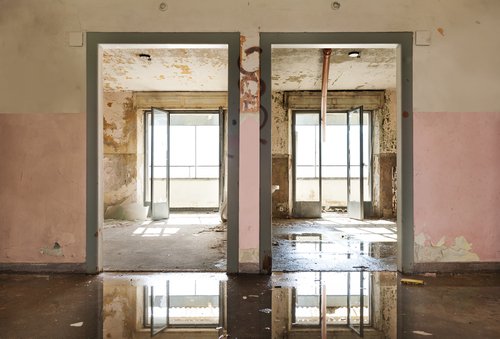
Removing water after a flood is one of the first steps toward rehabilitating household water damage, but DIY water removal isn't recommended in many cases. Homes with deep standing water may present dangers to the inexperienced amateur. Once the house has been checked by water damage recovery professionals and cleared for hazards, including electricity and exposure to toxic water, there may be some actions homeowners can take to help with removing water after a flood.
Start ASAP
The longer standing water remains in the house, the greater and more widespread the damage. Stagnation begins quickly and water becomes a breeding ground for bacteria, viruses and other biohazards. In addition, potential damage to the structure of the house and building materials is directly related to the length of time standing water is allowed to remain. Resulting high humidity can quickly damage portions of the house that aren't in direct contact with water, as well as spawn mold growth.
Rent the Right Pumps
It's unlikely that consumer-grade pumps you may already have on hand are up to the task of serious flood water removal. Consult a local rental outlet and explain your intended use. Most outlets have experience providing pumps designed for floods. Also, be sure to get full instructions on safe use, the proper pumping volume rate, etc.
If in doubt about what to use and how to use it, leave removing water after a flood to an experienced water removal specialist.
Use Heavy-Duty Vacuums
After standing water is out of the structure, vacuum residual water from surfaces and out of cracks, crevices and areas inaccessible to pumps. Utilize industrial-grade vacuums purpose-built for water removal. Standard consumer wet-dry vacs for home use don't provide the vacuum power nor safety factors for use in a water-inundated indoor environment.
Removing water after a flood shouldn't be a DIY project. For professional help and peace of mind, contact the experts at Rytech.
Image via Shutterstock.com


