

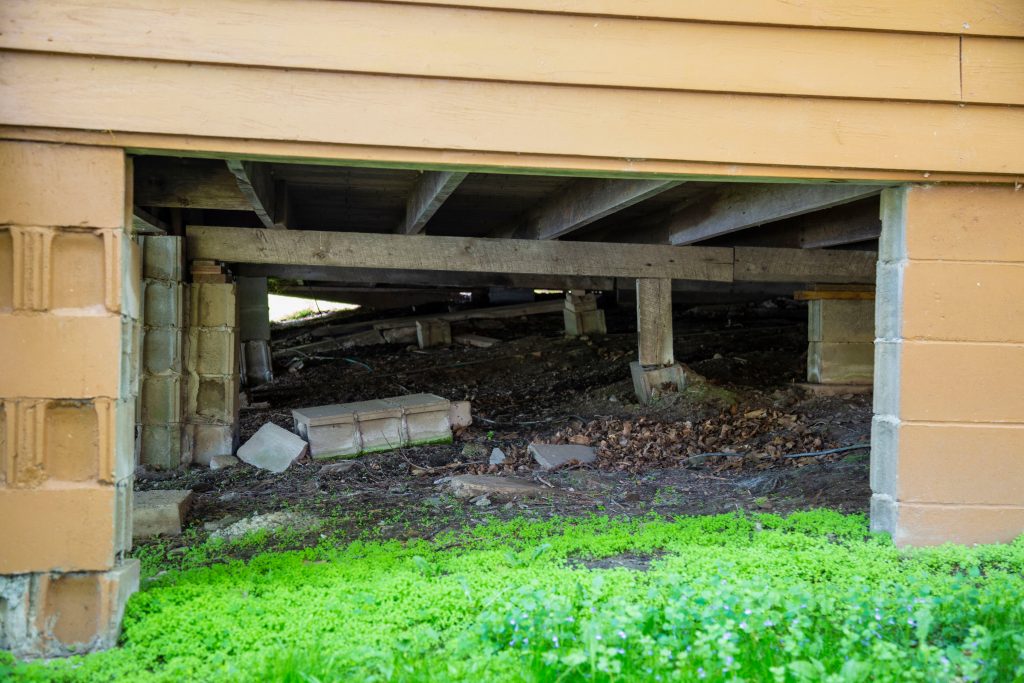
Crawl space construction in a home offers several benefits over slab or
basement. First, it's less expensive. A crawl space also allows plumbing and HVAC ductwork to be
more easily installed during construction as well as serviced later at a lower
cost. In locales where termites thrive, a crawl space keeps wooden structural
components off the ground to reduce potential damage.
However, a crawl space can also be an ongoing source of dampness in the form
of actual moisture as well as accumulated water vapor that infiltrates the
house. Crawl spaces provide a hospitable environment for toxic mold as
temperature, darkness and moisture are friendly to fungal growth. Chronically
wet conditions also inflict structural water damage, rotting wooden joists as well as
the sub-floor.
To reduce moisture in a crawl space and avoid issues related to it, here are
some suggestions:
- Control drainage. Outdoor water sources
may enter the crawl space if the ground around the perimeter of the house
isn't graded properly. The grade should slant away from the house at a
rate of at least 0.5 inch per foot. - Maintain gutters. Water cascading from clogged overflowing gutters during rain penetrates
deeply. Saturated soil spreads moisture into the crawl space. - Resolve plumbing issues. Drips from pinhole
leaks in pipes, as well as seepage around pipe joints, keep the crawl
space wet, 24/7/365. No leak, no matter how small, is “normal.”
Schedule an inspection by a plumber and have necessary repairs made. - Install a vapor barrier. Water vapor rising from
the soil often creates chronically moist conditions inside the crawl
space. It also infiltrates through cracks and gaps into living spaces
above. Excess moisture may be due to a naturally high water table in the
area. A vapor barrier is usually heavy duty plastic that covers the entire
floor of the crawl space to retain moisture in the soil. - Increase ventilation. Original crawl space
vents may be too small to allow proper air circulation to dry out moisture
inside the space. Wider vents can be installed to augment passive
ventilation and can be closed when necessary during high humidity days.


