

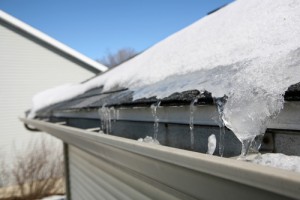
Water damage from ice dams is a wintertime threat to both the attic of your home and other living spaces.
Here's how: a heavy snowfall covers the roof uniformly. However, it frequently doesn't melt so consistently. When uneven roof temperatures cause irregular melting, ice dams may result and allow water from melting snow to penetrate the attic and rooms below. Water in the attic can damage roof sheathing, ruin attic insulation and warp wooden structure. It also provides a breeding ground for mold. As it continues to trickle downward, water leaks may ruin ceilings and eventually damage household possessions.
The primary culprit behind ice dams in winter is an under-ventilated attic. The passive air circulation in most attics is often not sufficient to disperse heat accumulation at the top of the attic that warms the roof unevenly. Heat migrating from living spaces rises to the top of the attic, warming the upper portion of the roof disproportionately. Snow melting from the warmer upper roof re-freezes as it reaches the lower, colder portions near the eaves. An ice dam forms and water accumulates. Because roofing shingles are not designed to resist continuous exposure to standing water, severe leakage into the attic results.
Here are a few suggestions to prevent water damage from ice dams:
- Reduce the migration of home heat into the attic by sealing air leaks into the attic and upgrading attic insulation.
- Increase attic ventilation to make the attic uniformly cold in winter and prevent roof warming that melts snow unevenly.
- Keep the gutters clear of debris to allow runoff from melting snow to flow freely off the roof.
- Have a water damage professional inspect any attic water damage to evaluate structural damage and prevent mold growth.
For more information on water damage from ice dams, contact Rytech.
Image via Shutterstock.com


