

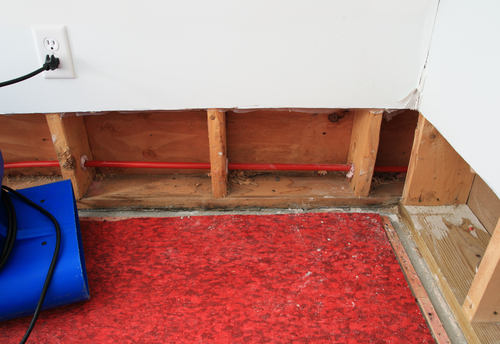
Because water always finds the lowest part of the house, drying out a wet basement is a task many homeowners will face at one time or another. From plumbing leaks and flood inundation to gradual groundwater seepage, basements are usually where water on the move ends up. Further complicating the issue, the enclosed location below grade makes many basements an under-ventilated zone where moisture can linger stubbornly and mold and mildew thrive.
Drying out a wet basement always requires time, but these specific tips may help speed the process:
- Ventilate and dehumidify. Whatever the source of basement moisture, getting air moving is a must. If the basement has windows, open them, and run fans to remove humidity and stop the cycle of evaporation and condensation. For ongoing moisture problems, investing in a dehumidifier, permanently installed in the basement, may provide a more longstanding solution.
- Use the furnace or A/C. If your basement is conditioned, heat from a furnace or the air conditioner's normal dehumidifying action can also assist in the drying process. Make sure all supply and return vents are open in the basement.
- Stop the influx. If external water infiltration is the problem, seal the basement walls and repair any cracks or flaws in the foundation with masonry caulk. Basement water may originate unexpectedly far from the house, so address nearby cracks in driveways and walkways as well.
- Watch the rain. Rain water cascading off the roof or overflowing clogged gutters, frequently penetrates the foundation and enters the basement. Take note of water runoff patterns during storms and eliminate sources of falling and splashing water around the immediate perimeter of the house.
For more info on techniques for drying out a wet basement, contact the water damage recovery experts at Rytech.
Image via Shutterstock.com


