

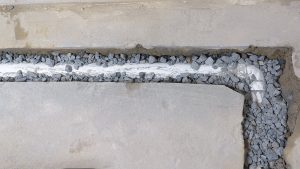
If you experience frequent water infiltration into the basement and/or secondary consequences like basement mold contamination, a drain tile could be the solution to these problems. Water soaking into the ground during rainfall, or a naturally high soil water content, exerts hydrostatic pressure on basement walls. Tiny cracks or porous concrete may allow seepage into the basement. While locating and sealing identifiable cracks or leaks is one approach to help inhibit the effects of water infiltration, eliminating the cause by maximizing soil drainage is another viable method.
What Is It And How It Works
Also known as a French drain, a drain tile is a series of underground pipes laid close to the foundation of the house in a narrow trench filled with loose rock. This material allows groundwater to percolate quickly into the pipe through perforations running along the top of the pipe.
The pipe is installed on a slight grade so water flows through the pipe and out to a location further from the house where water will not infiltrate into the basement or foundation.
Drain Tile Specs
Here are some specifics about materials and installation of a drain tile:
- Most residential drain tile pipe is 4-inch diameter PVC.
- If the main source of infiltration into the basement is surface water due to rainfall, the pipe may be buried about two feet in the ground. Water originating from subsurface sources requires a deeper pipe at least six feet underground.
- Loose rock material in the trench to facilitate drainage into the pipe is usually 3/4-inch gravel. A drain tile is typically covered by at least one foot or more of gravel.
- Tar paper or other material that provides a filtering effect is placed on top of the layer of gravel to prevent fine soil from infiltrating the drain tile and obstructing the flow of water.
- Soil is placed on top of the tar paper to fill in the trench and restore the normal surface of the lawn.


