
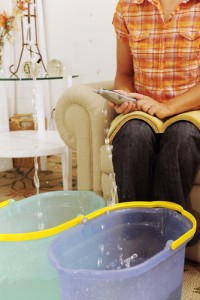
A leaking roof can be an expensive nuisance. Most leaks aren't evident by simply visually inspecting the exterior of the roof. Costly interior damage from roof leaks is often already done by the time you realize there's a problem in the first place. However, a leaking roof can also present safety issues, in addition to the obvious dangers of climbing up there and attempting to repair the leak yourself (not a recommended DIY project). Here are some of the safety hazards associated with a leaking roof.
Fire and electrical hazards: Household wiring is routed through the attic; recessed ceiling lights, some HVAC equipment and other electrical devices are also often present. Dripping water and electricity don't mix. While the danger of electrocution is one hazard, a more likely consequence of a leaking roof might be fire resulting from an electrical short caused by exposure to water. If you note any signs of a leaky roof, such as a stained ceiling or water dripping into living spaces, turn off electricity at the main panel and call a qualified electrician and roofing company.
Mold contamination: The slow drip of roof leaks into a dark, warm attic provides the trigger mechanism for toxic mold growth that requires only a source of moisture to activate. Insulation installed in the attic such as fiberglass batts and blown-in cellulose remain chronically damp from roof leaks, a perfect growing environment for mold. Contamination in the attic soon spreads throughout living spaces below as millions of airborne mold spores are reproduced. Occupants of the home may experience allergic reactions and chronic illness as a result of continuous exposure to active mold spores.
Structural damage: Wooden building materials in the attic such as studs and ceiling joists form a critical part of your home's structure. Continuous exposure to water from roof leaks causes wood rot and eventual failure of these components. Safety issues such as a potential ceiling collapse or an attic that's unsafe to enter may be the result.
Contact Rytech, Inc. for more information about safety issues and solutions.


