

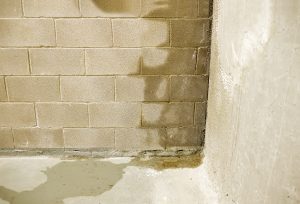
One way or another, a leaky basement ultimately becomes an issue for the rest of the house, too. It becomes impossible to separate water damage issues occurring down there from the overall integrity of the home's structure, as well as its healthy indoor environment. A leaky basement may occur due to hydrostatic pressure pushing groundwater up through the foundation, over-saturated soil seeping through basement walls after heavy rain, sump pump failure, leaky plumbing pipes, or ruptured water heater.
Whatever the cause, the presence of water seepage or flooding in an enclosed basement just beneath your living space isn't something you should live with for long. Here are four major consequences of a leaky basement:
- Foundation damage. Groundwater infiltration through tiny fissures and pores in the foundation steadily degrades the structural integrity of the cement. Eventually, a water-damaged, deteriorated foundation no longer provides sufficient support and the house will begin to shift under its own weight, inflicting expensive damage to the structure.
- Weakened walls. The sturdiness of basement walls can be compromised by leakage due to high soil water content. During periods of heavy rain, water seepage may occur through mortar joints between wall cinder blocks. This reduces the structure's strength and can cause inward bowing of the wall, as well as widening cracks that admit more water.
- Electrical issues. Components relating to the home's electrical system are located in the basement. The circuit breaker panel often installed there may be affected by water damage, particularly leaking or ruptured plumbing pipes. Electrical wiring is also routed through the basement. A wet circuit breaker panel in a leaky basement requires total replacement. Most electricians recommend that any submerged wiring should also be replaced for safety reasons, even if it appears to dry naturally.
- Mold growth. A leaky basement is like a mold laboratory. Once water is added, all the required ingredients are present for active fungal growth. Microscopic airborne spores originating from contamination in the basement migrate upward and spread toxic mold into the living spaces of the home, presenting a health hazard to susceptible individuals.


